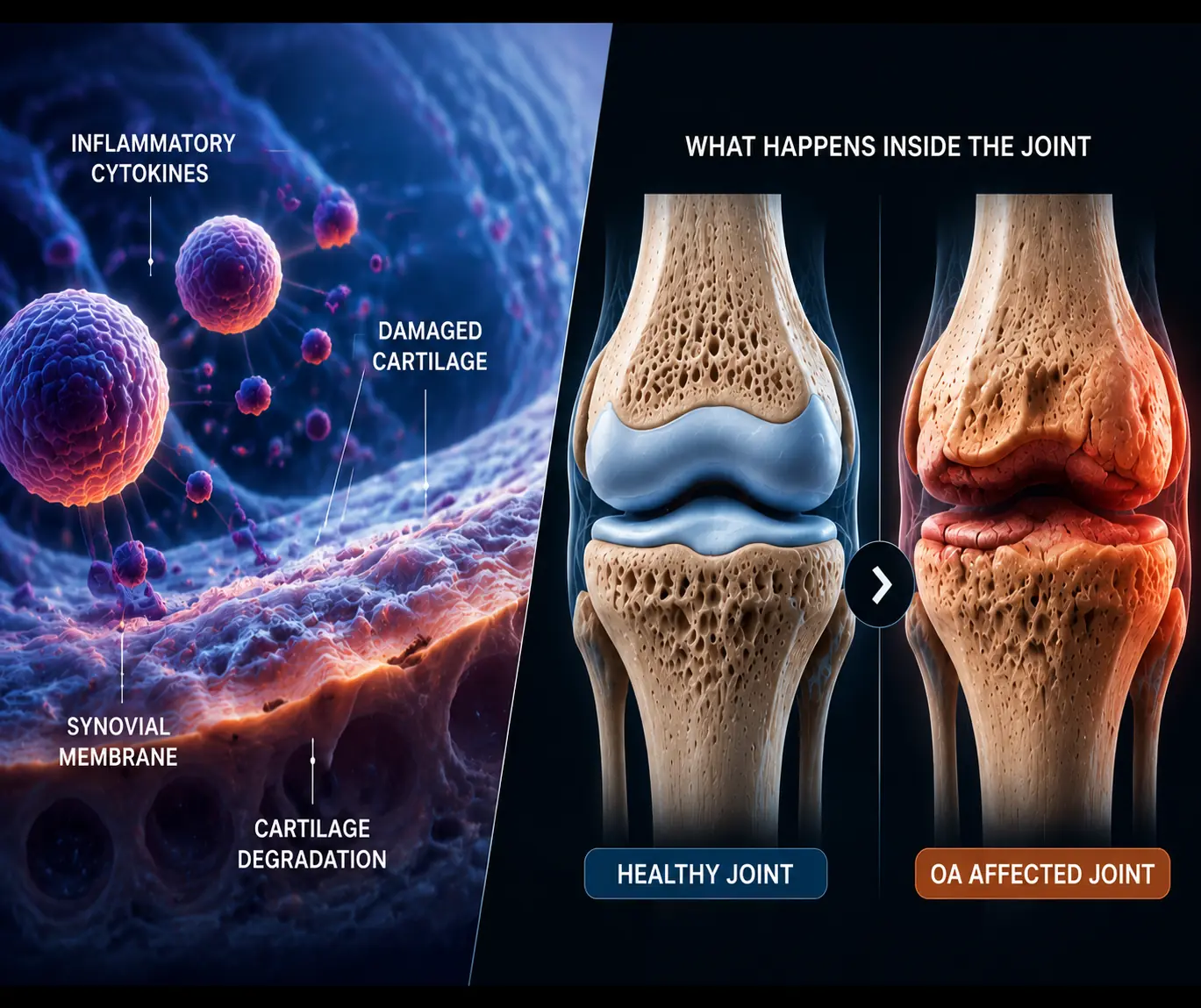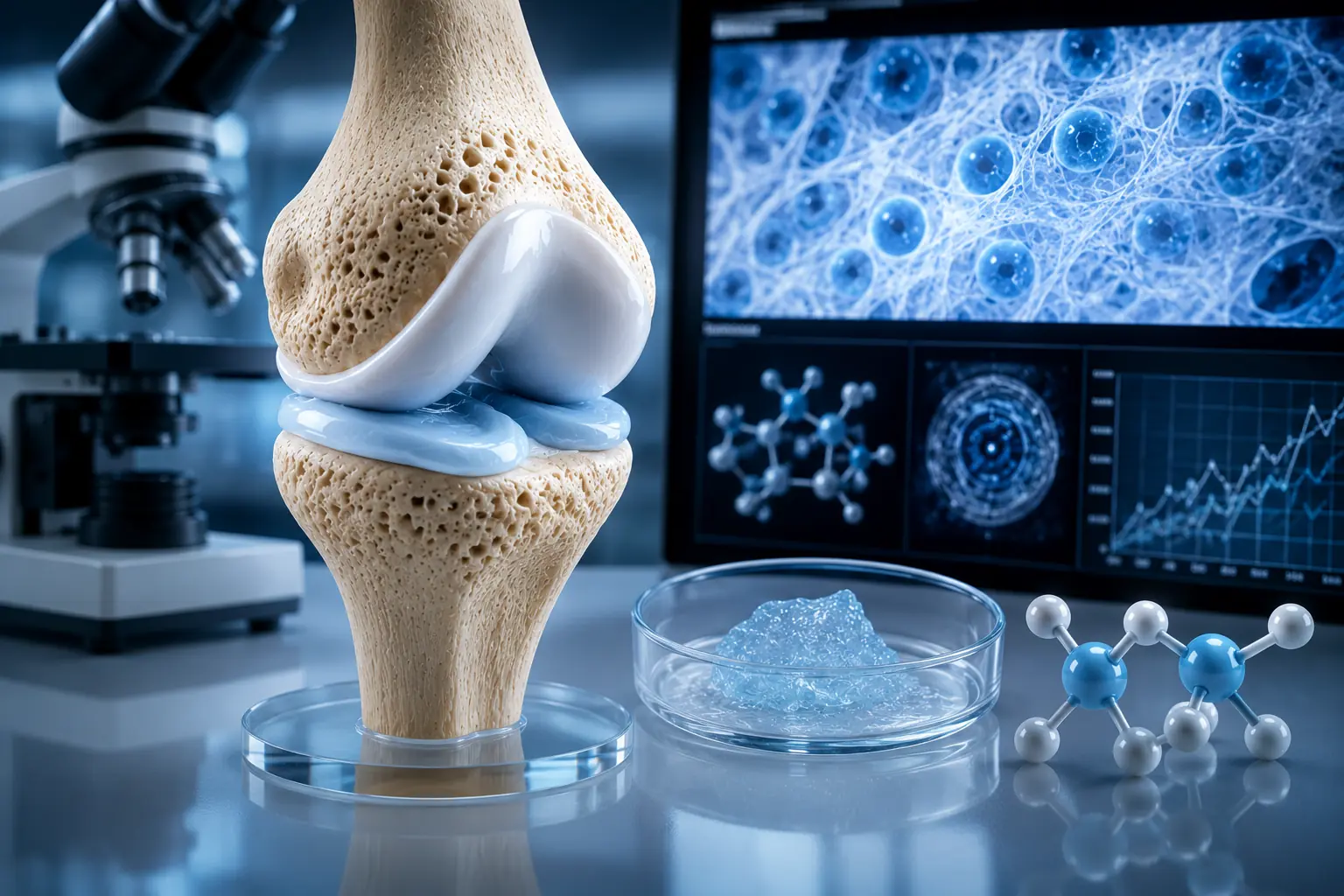
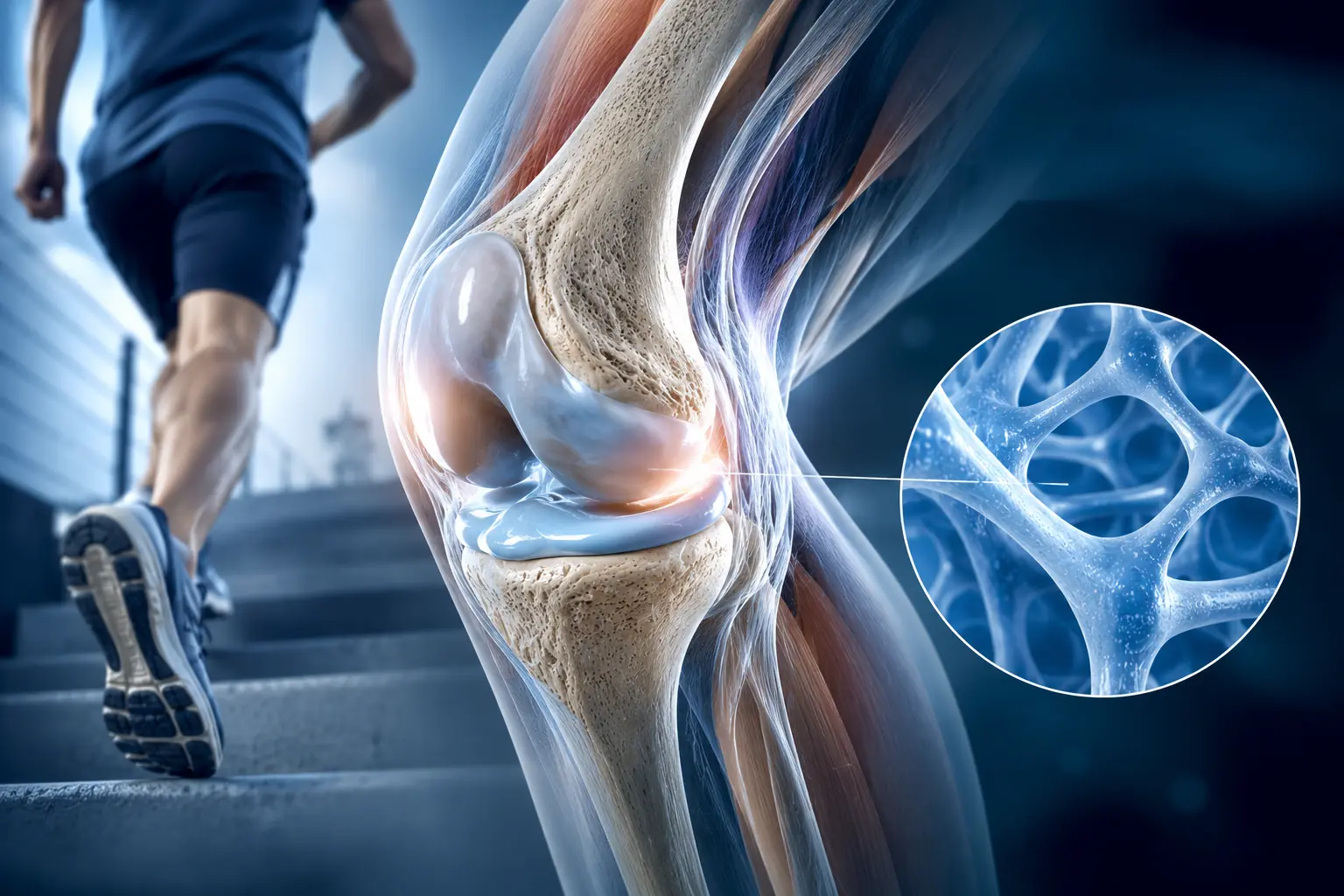
Our joints allow us to perform thousands of movements every day—walking, climbing stairs, running, sitting down, or simply picking up an object. Although we often pay attention to them only when discomfort appears, behind every movement lies a highly specialized structure that works continuously to reduce friction and absorb impact.
One of the most important components of this structure is Type II collagen, a protein that makes up most of the articular cartilage and has attracted growing interest within the scientific community for its role in joint health.
But what exactly is Type II collagen? What role does it play within cartilage? And what does the latest scientific evidence tell us about this important component?

What Is Type II Collagen?
Collagen is the most abundant structural protein in the human body. To date, scientists have identified at least 28 different types of collagen, each serving specific functions in different tissues.
While Type I collagen is primarily found in the skin, tendons, and bones, Type II collagen is found almost exclusively in hyaline cartilage, the tissue that covers the ends of bones within the joints.
According to the National Institute of Arthritis and Musculoskeletal and Skin Diseases (NIAMS), articular cartilage acts as a natural shock absorber, allowing bones to glide smoothly against each other while helping distribute the forces generated during movement.
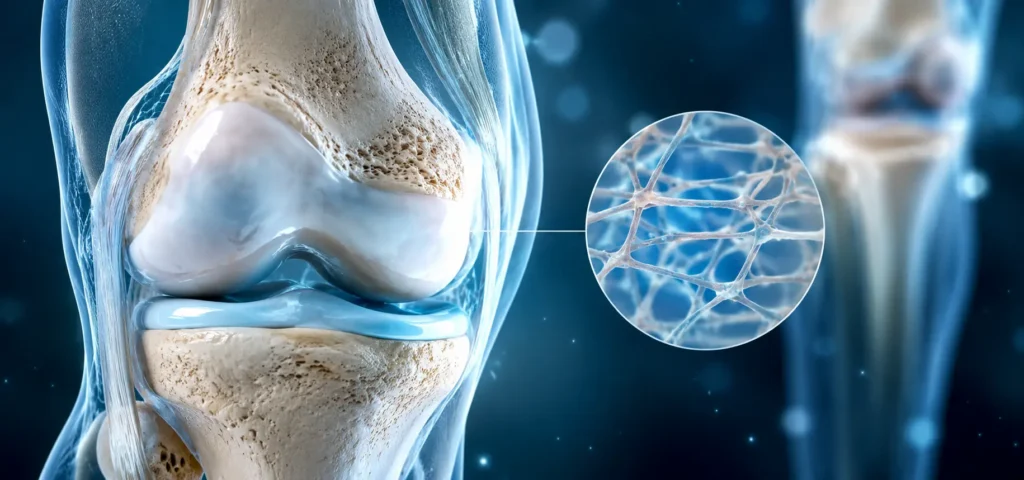
Type II collagen forms the network of fibers that provides this tissue with its mechanical strength and stability, allowing it to withstand repeated stress over many years.
How Does It Function Within Cartilage?
Cartilage is composed primarily of water, collagen, and proteoglycans.
Although water accounts for a large portion of its composition, it is the network formed by Type II collagen that maintains the tissue’s structural organization.
This microscopic framework helps to:
Provide structural strength.
Distribute mechanical loads.
Absorb impact.
Promote smooth movement between bones.
Whenever we walk or perform physical activities, cartilage compresses and then returns to its original shape thanks to the interaction between Type II collagen and other components of the extracellular matrix.
Why Has Type II Collagen Become Such an Important Focus of Scientific Research?
Over the past two decades, universities, hospitals, and research centers have conducted numerous studies to better understand the role of Type II collagen in joint health.
Researchers are interested not only in understanding how cartilage is formed but also in exploring how specific nutritional components may contribute to maintaining its normal function.
One of the most frequently cited clinical trials was published in 2016 by researchers led by James P. Lugo, together with specialists from the Center for Musculoskeletal Health at the University of California, Davis. The study evaluated the use of undenatured Type II collagen (UC-II®) in individuals with knee osteoarthritis over a 180-day period.
The researchers compared three groups of participants:
Undenatured Type II collagen.
Glucosamine plus chondroitin.
Placebo.
Throughout the study, they evaluated several commonly used clinical outcomes, including:
Pain.
Stiffness.
Physical function.
Mobility.
At the conclusion of the study, the group receiving undenatured Type II collagen demonstrated statistically significant improvements in several measures related to joint function compared with the placebo group. The authors also emphasized that these findings should be interpreted within the context of the study and that additional research is necessary to further strengthen the available evidence.
What Does More Recent Research Say?
Since then, scientific evidence has continued to grow.
In recent years, additional studies and review articles have continued exploring the role of Type II collagen in nutritional support for joint health, as well as the biological mechanisms through which it may interact with the immune system and cartilage matrix.
Scientific reviews published between 2022 and 2024 agree that Type II collagen remains one of the most extensively studied ingredients in the field of joint nutrition. However, they also emphasize the importance of conducting additional clinical trials involving different populations, dosages, and follow-up periods to further strengthen the current body of evidence.
This reflects one of the fundamental principles of scientific research: knowledge continues to evolve, and every new study contributes to a deeper understanding of how the human body functions.
Looking Beyond Collagen: A Comprehensive Approach to Joint Health
Healthy joints depend on many different factors.
Scientific evidence supports the importance of adopting a comprehensive approach that includes:
Regular physical activity.
Maintaining a healthy body weight.
A balanced diet.
Adequate rest.
Medical guidance whenever appropriate.
Understanding how cartilage functions and the role that components such as Type II collagen play within it allows people to make more informed decisions about protecting their joints throughout life.
Conclusion
Type II collagen is much more than a protein found within cartilage. It is one of the primary structural components that helps maintain the normal function and integrity of healthy joints, which is why it continues to be extensively studied by universities, hospitals, and research institutions around the world.
Although scientific knowledge continues to evolve, the research published to date has significantly expanded our understanding of this important component and its relationship with joint health. At SUN LIFE LAB, we believe that science-based knowledge is an essential tool for helping people better understand their bodies and make informed decisions about their long-term well-being.