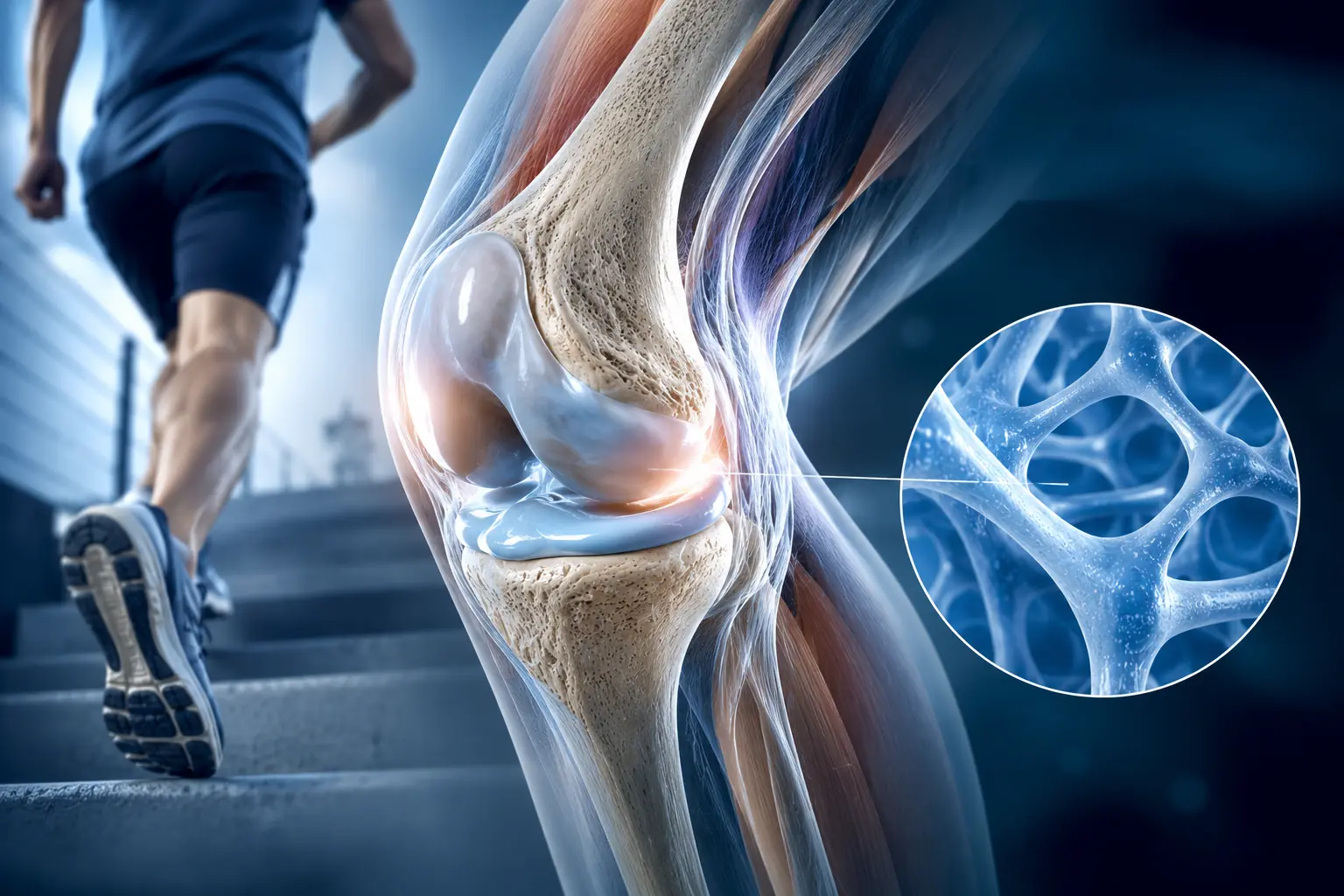
Millions of people experience stiffness, discomfort, or difficulty moving a joint at some point in their lives. In many cases, these changes are associated with a condition that has been extensively studied by the scientific community for decades: osteoarthritis.
Although it is often associated only with aging, we now know that osteoarthritis is a complex disease involving biological, mechanical, genetic, and metabolic factors. For this reason, researchers around the world continue working to better understand how it develops and to identify the most effective strategies for preserving joint function.
But what exactly is osteoarthritis? How does it affect the joints? What are its risk factors? And what does the latest scientific evidence tell us?
What Is Osteoarthritis?
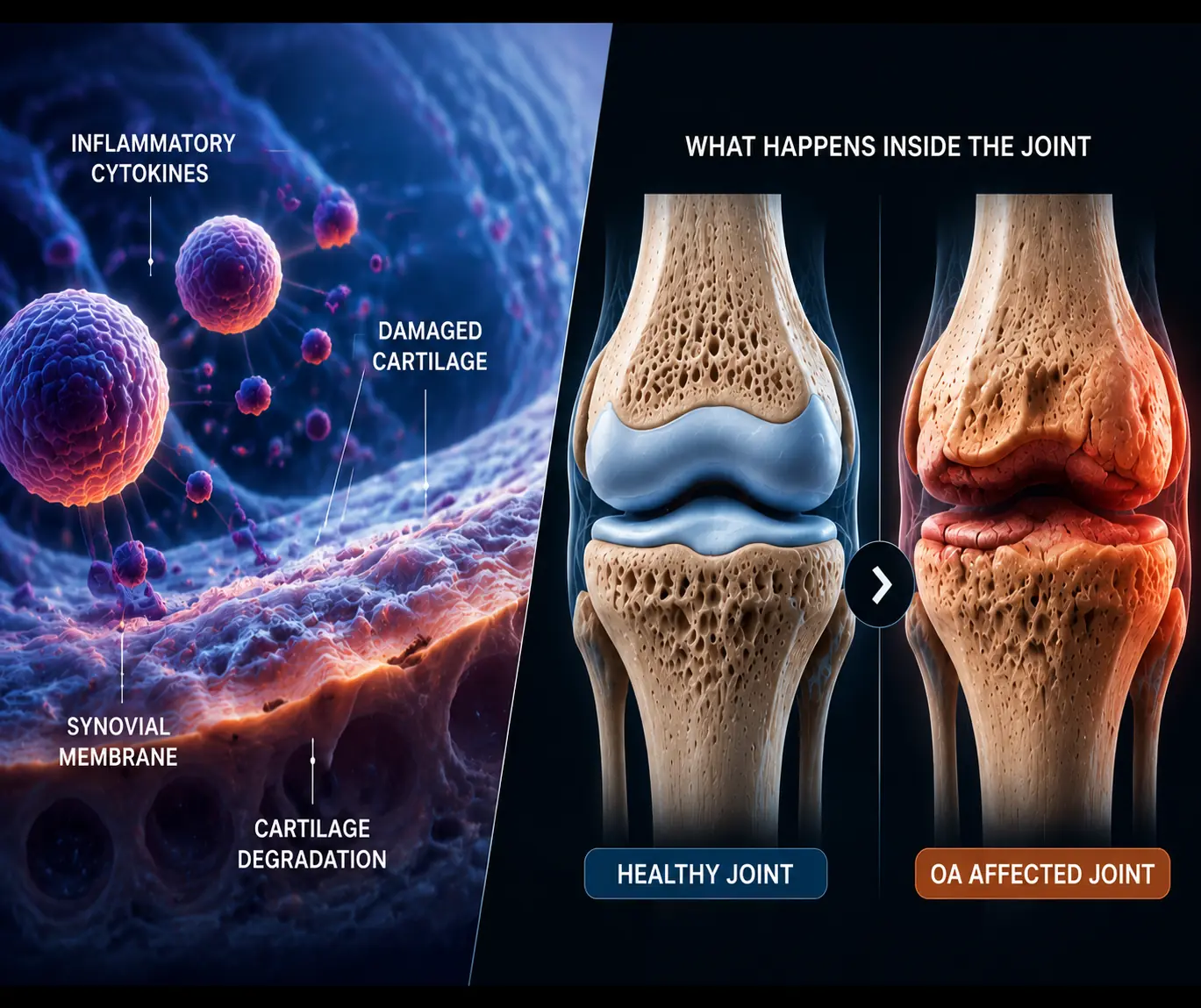
Osteoarthritis is a chronic joint disease characterized by progressive changes affecting the cartilage, subchondral bone, synovial membrane, and other tissues that make up the joint.
For many years, it was simply described as a condition caused by the “wear and tear” of cartilage. However, research conducted over the past two decades has shown that osteoarthritis is far more complex.
Today, organizations such as the National Institute of Arthritis and Musculoskeletal and Skin Diseases (NIAMS) and the Osteoarthritis Research Society International (OARSI) recognize osteoarthritis as a disease that affects the entire joint rather than cartilage alone.
This means that changes may occur simultaneously in several structures, including:
Articular cartilage.
Subchondral bone.
Synovial membrane.
Ligaments.
The muscles surrounding the joint.
How Does Osteoarthritis Develop?
Joints are designed to withstand millions of movements throughout a lifetime.
However, when the balance between tissue repair and wear begins to change, gradual alterations may develop within the joint.
Scientific research indicates that these changes may include:
Alterations in cartilage composition.
Reduced ability to absorb impact.
Remodeling of the subchondral bone.
Low-grade inflammatory changes.
Alterations in the production and composition of synovial fluid.
These processes usually develop gradually over many years and can vary considerably from one person to another.
Which Joints Are Most Commonly Affected?
Osteoarthritis can develop in almost any joint, although some joints bear greater mechanical loads and are therefore more frequently affected.
The most commonly involved joints include:
Knees.
Hips.
Hands.
Spine.
Feet.
According to the World Health Organization (WHO), the knee is one of the most frequently affected joints and one of the leading causes of functional limitations associated with this disease.

What Are the Main Risk Factors?
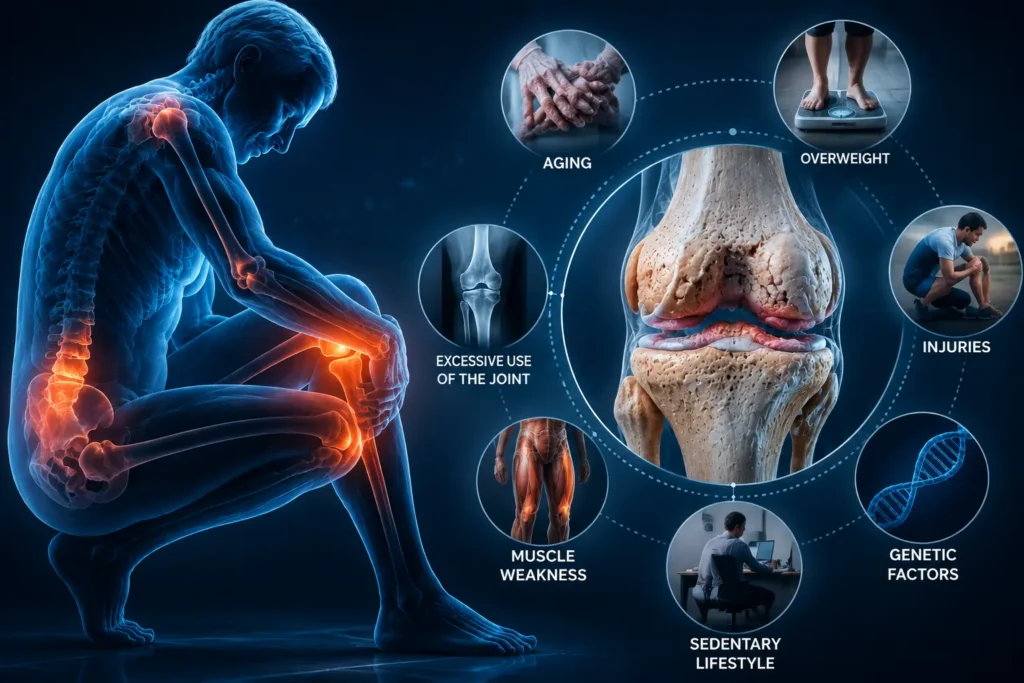
Scientific evidence shows that there is no single cause responsible for the development of osteoarthritis.
In most cases, multiple factors interact over time.
The most important include:
Aging.
Family history.
Overweight and obesity.
Previous joint injuries.
Repetitive occupational activities.
High-impact sports.
Muscle weakness.
Biomechanical abnormalities.
Not everyone has the same risk factors, nor does the disease progress in the same way for every individual.
What Symptoms May Develop?
Symptoms may vary depending on the affected joint and the progression of the disease.
The most common include:
Pain during or after movement.
Stiffness, especially after periods of inactivity.
Reduced range of motion.
A sensation of grinding or crepitus.
Mild swelling in some cases.
Progressive loss of joint function.
Specialists emphasize that symptom severity does not always correspond to imaging findings, highlighting the complexity of this condition.
What Does Recent Research Tell Us?
Over the past several years, osteoarthritis research has advanced significantly.
Institutions such as Harvard Medical School, the National Institutes of Health (NIH), OARSI, Nature Reviews Rheumatology, and numerous international research centers continue investigating the biological mechanisms involved in the disease.
Current research focuses on areas such as:
Low-grade inflammation.
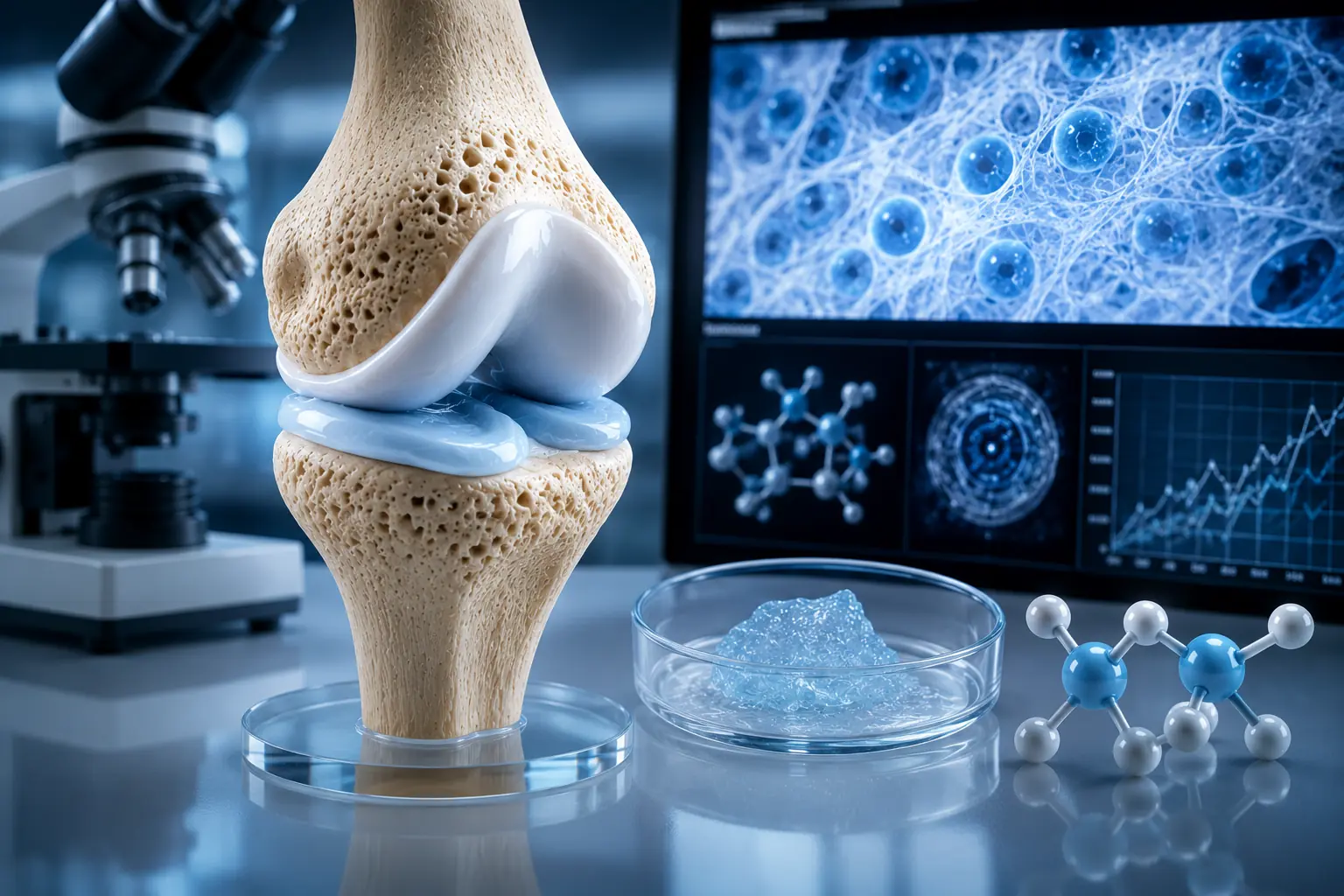
Cartilage biology.
Communication between bone and cartilage.
Biomarkers.
Genetics.
Regenerative medicine.
Tissue engineering.
Artificial intelligence for diagnosis.
New strategies to preserve joint function.
Scientific reviews published between 2022 and 2025 agree that our understanding of osteoarthritis continues to evolve rapidly and that each new discovery contributes to a better understanding of how the disease develops.
How Can Joint Health Be Supported?
Although osteoarthritis currently has no definitive cure, multiple medical organizations agree that a comprehensive approach can help support joint function and contribute to disease management.
Evidence-based strategies include:
Maintaining a healthy body weight.
Participating in physical activity appropriate for each individual.
Strengthening the muscles surrounding the joints.
Following a balanced diet.
Adhering to the recommendations of healthcare professionals.
Adopting daily habits that promote mobility.
Every care plan should be individualized according to each person’s specific needs and medical condition.
Where Is Research Headed?
Osteoarthritis research is currently experiencing one of the most promising periods in its history.
Today, hundreds of clinical trials are underway worldwide to better understand the biological mechanisms responsible for the disease and to develop new strategies for preserving joint health.
Fields such as bioengineering, regenerative medicine, biomaterials, cell-based therapies, and artificial intelligence are among the most active areas of investigation.
Although many challenges remain, each new study provides valuable insights that continue expanding our understanding of this complex disease.
Conclusion
Osteoarthritis is far more than simple joint wear and tear. Today, it is recognized as a complex disease involving multiple tissues and biological mechanisms, which is why it continues to be the focus of extensive research by universities, hospitals, and scientific institutions around the world.
Understanding how osteoarthritis develops, recognizing its risk factors, and becoming familiar with evidence-based strategies for supporting joint health can help people make more informed decisions about their long-term well-being.
As scientific research continues to advance, new opportunities continue to emerge for improving our understanding of this disease and developing innovative strategies aimed at preserving mobility and quality of life.
At SUN LIFE LAB, we believe that science-backed knowledge is the foundation for better understanding our bodies and making informed decisions about joint health and overall wellness.