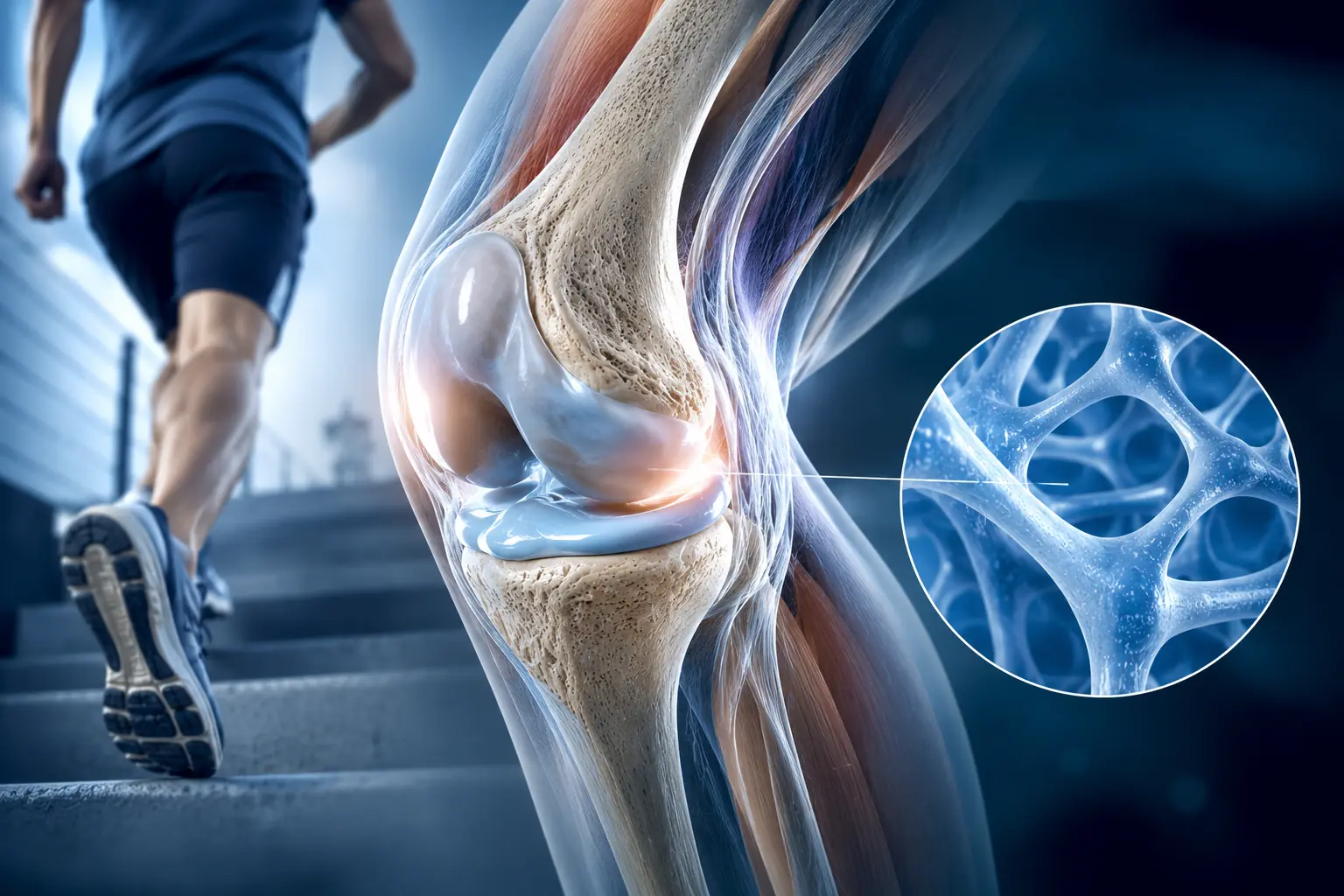
Every time we walk, climb stairs, play a sport, or simply stand up from a chair, our joints perform an extraordinary job. Behind each of these movements lies a highly specialized tissue that allows bones to glide smoothly against one another while absorbing the impact generated by body weight: articular cartilage.
Although it often goes unnoticed, cartilage is one of the most important components of the musculoskeletal system. Its proper function is essential for maintaining mobility, stability, and quality of life throughout the years.
But what exactly is cartilage? How does it work? Why can it gradually deteriorate over time? And what does science say about the best ways to care for this remarkable tissue?

What Is Cartilage?
Cartilage is a specialized connective tissue composed of cells called chondrocytes, surrounded by a matrix rich in collagen, proteoglycans, and water.
According to the National Institute of Arthritis and Musculoskeletal and Skin Diseases (NIAMS) and the Cleveland Clinic, cartilage performs essential functions in different parts of the body, including the joints, nose, ribs, and airways.
There are three main types of cartilage:
Hyaline cartilage, found in the joints.
Elastic cartilage, located in structures such as the ear.
Fibrocartilage, found in the intervertebral discs and menisci.
Within the joints, hyaline cartilage plays the most important role by covering the ends of the bones and creating a smooth surface that allows effortless movement.

How Does Cartilage Work?
Cartilage acts as a sophisticated shock-absorbing system.
Whenever a person walks, runs, or jumps, the joints experience forces that can exceed several times the body’s weight. Cartilage distributes these loads evenly while reducing friction between bones, allowing smooth and efficient movement.
Its function depends on the coordinated work of several structures:
Cartilage distributes mechanical loads.
Synovial fluid lubricates the joint and delivers nutrients.
Subchondral bone provides structural support.
Muscles help stabilize the joint.
Ligaments contribute to maintaining joint stability.
Together, these structures enable the joints to withstand millions of movements throughout a lifetime.
Why Does Cartilage Have a Limited Capacity to Heal?
One of cartilage’s most unique characteristics is that it contains no blood vessels, nerves, or lymphatic vessels.
This means it does not receive oxygen or nutrients directly like most other tissues in the body. Instead, it relies primarily on synovial fluid to obtain nutrients through a diffusion process that occurs during joint movement.
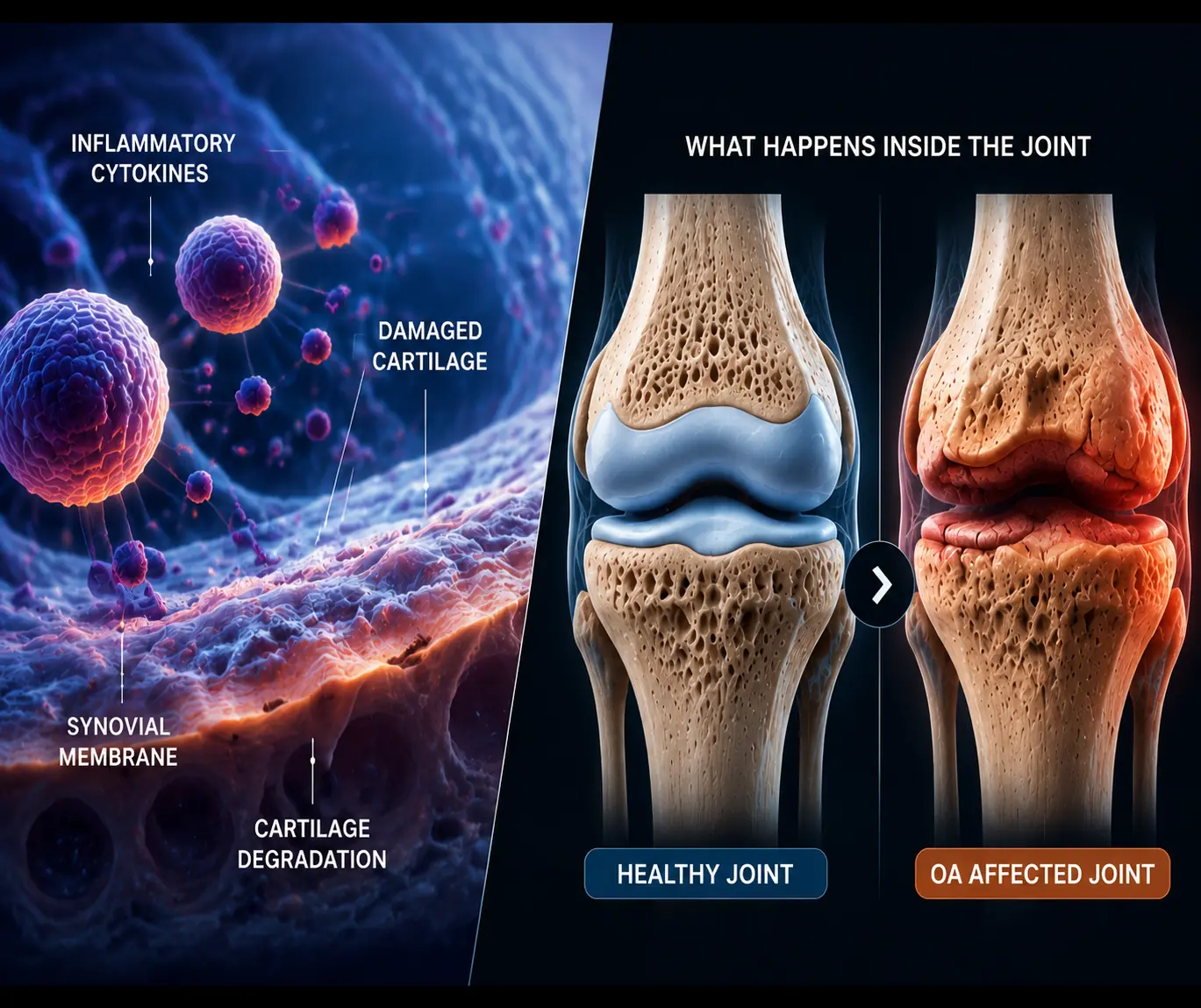
According to research published by the National Institutes of Health (NIH) and reviews in Nature Reviews Rheumatology, this explains why cartilage has a limited ability to repair itself after injury or gradual wear.
For this reason, scientists believe that preserving cartilage health from an early age is one of the most important strategies for maintaining long-term joint function.
What Factors Can Affect Cartilage Health?
The condition of cartilage depends on numerous factors that interact over time.
Some of the most important include:
Natural aging.
Excess body weight.
Joint injuries.
Repetitive high-impact activities.
Prolonged sedentary behavior.
Poor nutritional habits.
Genetic factors.
Leading institutions such as Harvard Medical School, the American Academy of Orthopaedic Surgeons (AAOS), and the Mayo Clinic agree that many of these factors can be positively influenced through healthy lifestyle habits and regular physical activity.
What Does Science Say About Caring for Cartilage?
Over the past several decades, scientific research has significantly expanded our understanding of how daily habits can help support joint health.
Evidence-based recommendations from scientific organizations include:
Maintaining a healthy body weight to reduce stress on the joints.
Engaging in regular physical activity, particularly low-impact exercises such as walking, swimming, or cycling.
Strengthening the muscles surrounding the joints.
Following a balanced diet rich in essential nutrients.
Avoiding prolonged periods of inactivity.
Recent studies published between 2022 and 2025 continue to support regular movement as one of the most effective ways to help preserve normal cartilage function.
Can Cartilage Regenerate?
Cartilage regeneration remains one of the greatest challenges in modern medicine.
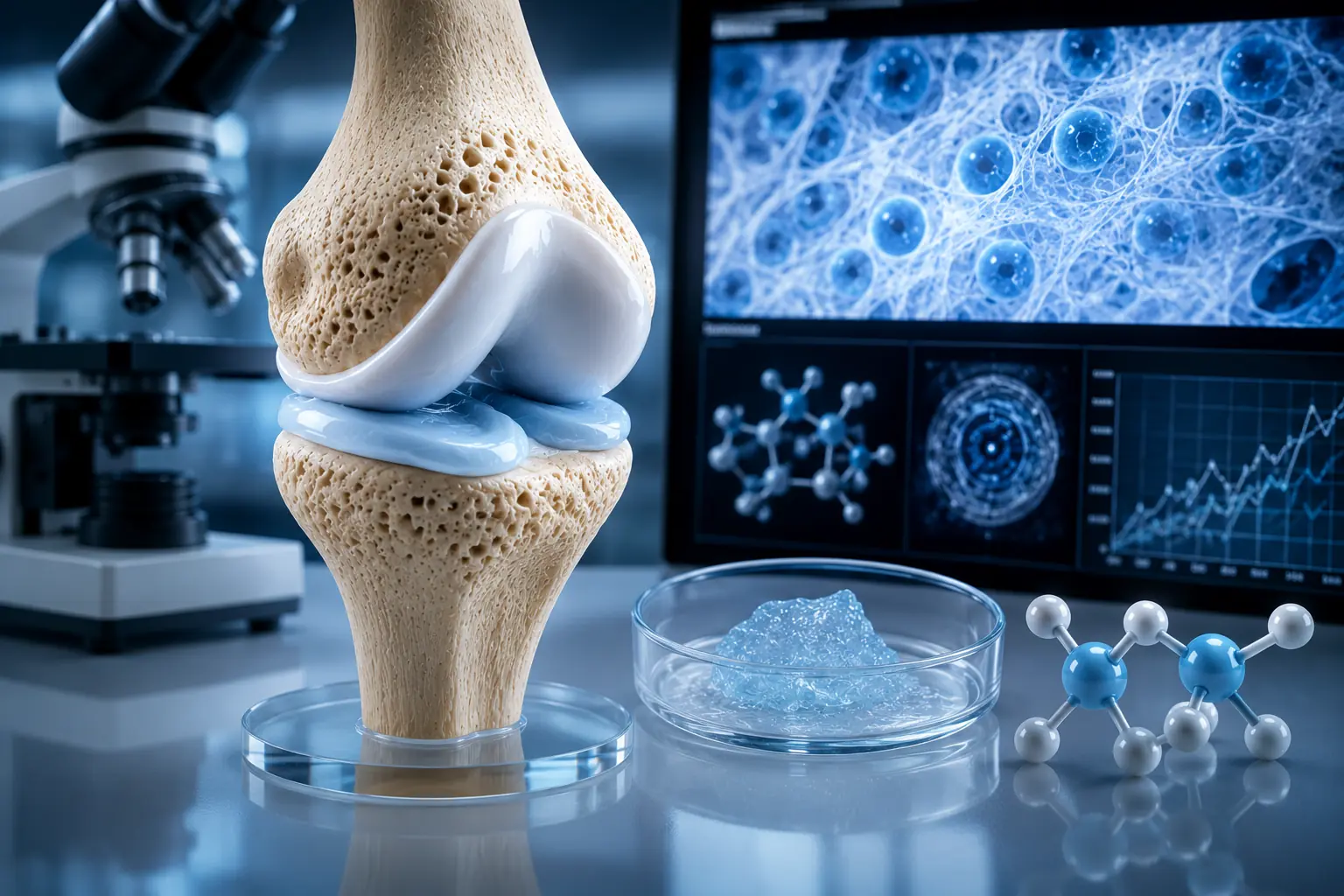
Today, universities and research centers around the world continue investigating new approaches involving:
Tissue engineering.
Biomaterials.
Cell-based therapies.
Regenerative medicine.
Cartilage bioengineering.
Although these advances have shown promising results in certain areas of research, experts agree that additional studies are still needed to better understand their long-term effectiveness and clinical applications.
Research continues to move forward with the goal of developing new strategies to help preserve and restore cartilage function more effectively.
Why Caring for Cartilage Before Symptoms Appear Matters
Joint health does not begin when discomfort appears—it begins long before that.
Understanding how cartilage functions highlights the importance of adopting healthy habits that help support joint health throughout every stage of life.
Staying physically active, managing risk factors, and making decisions based on science-backed information can make a meaningful difference in long-term joint wellness.
Each new scientific discovery expands our understanding of this remarkable tissue and reinforces the value of prevention as part of a comprehensive approach to joint health.
Conclusion
Cartilage is much more than the tissue that covers the ends of bones. It is a highly specialized structure that enables movement, distributes mechanical loads, and helps protect joints from the daily forces they experience.
Thanks to the ongoing work of universities, hospitals, and research institutions, we now have a much deeper understanding of how cartilage functions and the factors that contribute to maintaining its health over time.
Although scientific knowledge continues to evolve, the available evidence consistently points to one clear message: caring for cartilage through healthy lifestyle habits and informed decisions is one of the most effective ways to help preserve mobility and quality of life throughout every stage of life.
At SUN LIFE LAB, we believe that science-based knowledge is the first step toward better understanding our bodies and making informed decisions about joint health and overall well-being.